
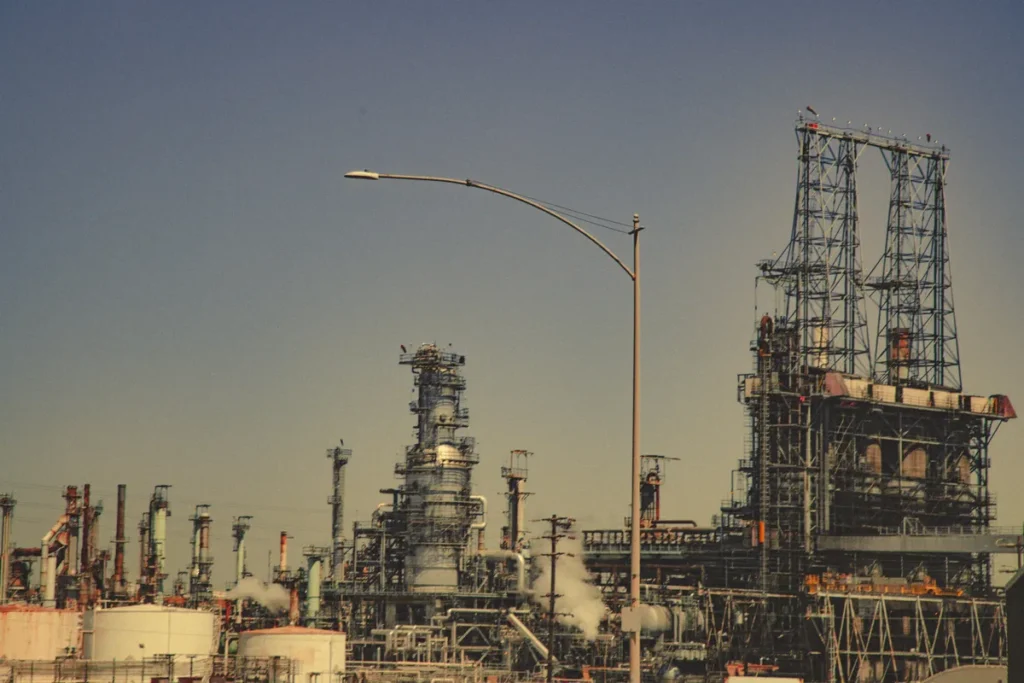
BP has announced a BP restructure into two divisions (upstream and downstream) taking effect from the start of July, as new chief executive Meg O’Neill moves to simplify the oil giant’s operations and cut costs.
At its most basic, upstream oil and gas activity means finding and extracting oil and gas from the ground, while downstream covers what happens after extraction: refining the crude oil, moving it through pipelines and managing terminals. Currently, BP operates in three divisions, and its trading operation will be split across the two new arms rather than remaining a standalone unit.
What the BP restructure into two divisions actually changes
Gordon Birrell will lead the upstream business, which covers oil and gas locations including exploration and production. Richard Harding will head the downstream operation on an interim basis, overseeing refining, terminals and pipelines.
O’Neill, who took over as chief executive in April, said the reorganisation will ‘reduce complexity and strengthen execution’. She added: ‘Over the past two months, I have spent time with our teams, partners and investors around the world, and I am encouraged by the strong support for our strategic direction. Focusing BP around two distinct segments is an important step in accelerating delivery.’
The FTSE 100 firm said the overhaul will support efforts to reduce costs and simplify its portfolio. Shares in the company were around 2.5% lower on Tuesday afternoon.
Reporting structure will stay the same for now
One practical detail matters for anyone watching BP’s financial results: the internal restructuring does not immediately change how the company reports its numbers publicly. According to World Oil, BP’s external financial reporting will continue under its current segment structure through the end of 2026. In plain terms, the quarterly results investors and analysts scrutinise will still be presented in the old format for the time being, even as the internal management structure shifts in July. That distinction matters because it means the financial impact of the reorganisation will not be straightforwardly visible in official accounts until at least 2027.
This separation between internal structure and external reporting is not unusual for large reorganisations. Companies often run the new management model first, then align their accounting and reporting once the structure has bedded in.
The pressure O’Neill is under
O’Neill replaced Murray Auchincloss and has taken charge during a turbulent period for the company. The restructuring comes shortly after the removal of former chairman Albert Manifold, who departed following what BP described as ‘serious concerns’ related to his conduct, oversight and governance at the firm.
Manifold rejected what he called ‘lies’ about his conduct. He said his views on cost-cutting and calling out ‘excessive expenditure’ on things like a limousine or private flight were not shared by others at the firm.
The leadership upheaval has added urgency to O’Neill’s task. A simpler two-division structure is, in essence, a bet that fewer management layers and clearer lines of accountability will help BP move faster and spend less. Whether that plays out will become clearer once the new structure is operational in July and, eventually, once BP begins reporting under a revised financial framework after 2026.
BP’s BP restructure into two divisions is one of the more concrete changes O’Neill has announced since taking the top job, and investors will be watching closely when third-quarter results give the first real-world view of how the new upstream and downstream arms are performing under their respective leaders.
The London Stock Exchange-listed company has said the July start date is firm, giving both divisions a matter of weeks to prepare for the handover.