How Turkish Polar Research Is Feeding a New Model for Resource-Efficient Science
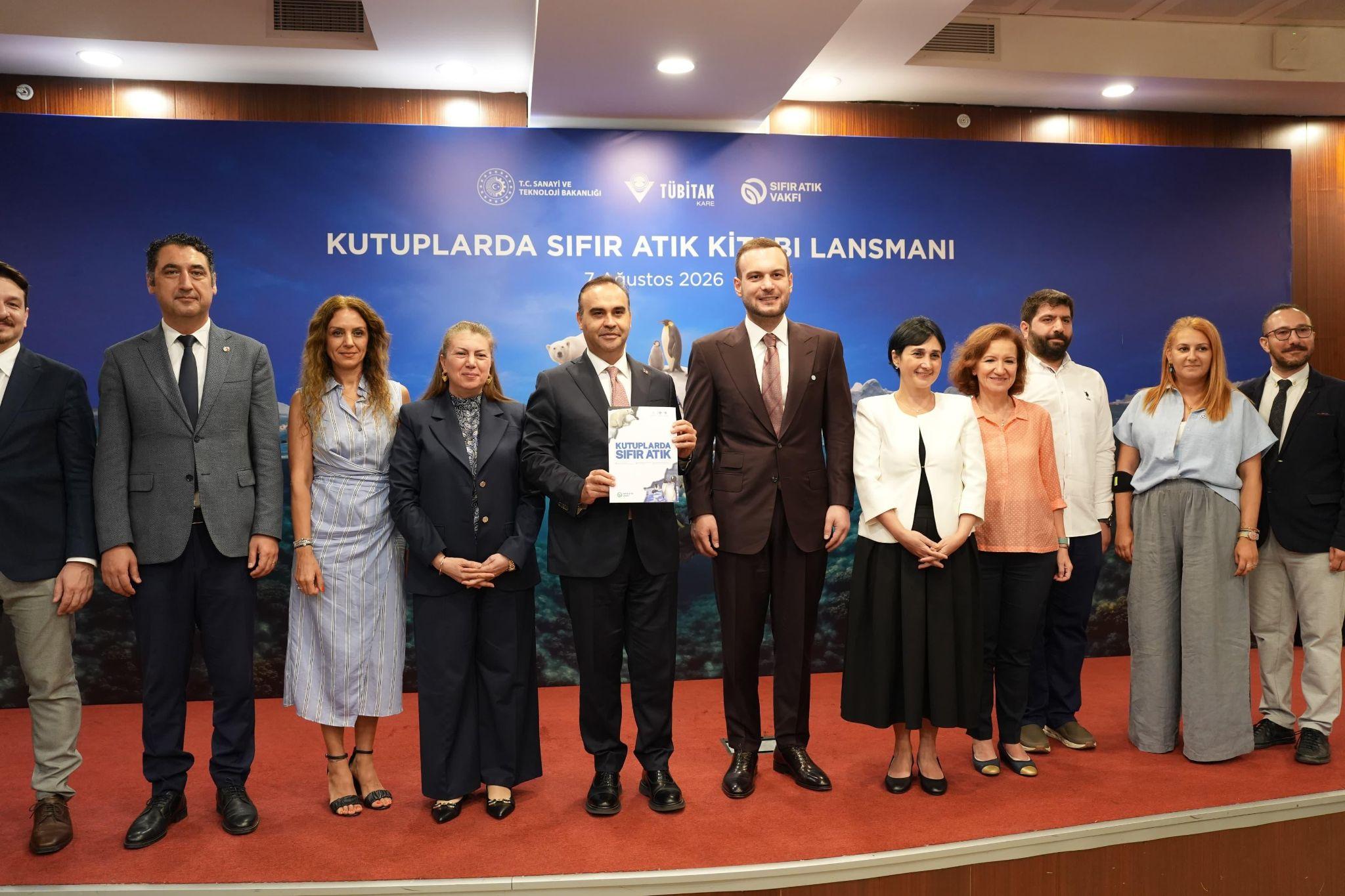
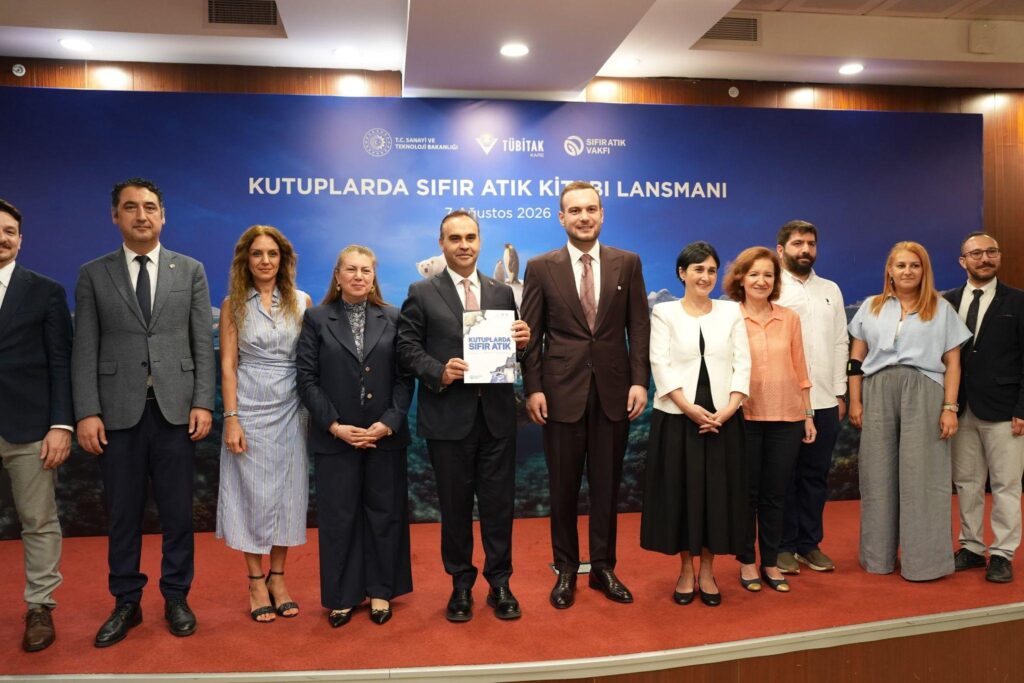
A new publication on zero waste practices in the Arctic and Antarctic is offering technology and research teams a rare look at how resource management systems, from energy and water use to logistics planning, can be engineered for some of the most extreme operating environments on Earth. The book, “Zero Waste in the Polar Regions”, was prepared with TÜBİTAK’s (Scientific and Technological Research Council of Türkiye) Polar Research Institute and launched on 7 August, bringing together 18 articles from scientists who have conducted polar research.
For readers focused on applied science and systems engineering, the significance lies less in the geography than in the methodology. The publication does not treat zero waste as a matter of collecting and sorting rubbish. Instead, it examines how scientific expeditions are planned from the outset, how materials and resources are sourced and used, and how energy, water and logistics chains are managed to reduce waste before it is generated. That framing positions the research as a case study in resource-efficient operations under constrained, high-cost conditions, the kind of thinking that has obvious relevance to any organisation running technical operations in remote or resource-limited settings.
A technical framework built from real expedition data
The book draws on scientific data to examine climate change, environmental pollution and zero waste practices across polar research activity, covering scientific, technical, administrative and communication dimensions of the approach. Its authors argue that the polar regions function as critical indicators of global climate change, meaning that environmental shifts recorded there carry consequences that extend well beyond the Arctic and Antarctic themselves. That claim gives the technical content a relevance that reaches past polar science into broader environmental monitoring and data collection practice.
Mehmet Fatih Kacır, Minister of Industry and Technology of Türkiye, framed the publication as the convergence of two national programmes that both started in 2017: the domestic zero waste initiative and the country’s scientific expeditions to Antarctica and the Arctic. “The Zero Waste initiative launched under the leadership of H.E. Emine Erdoğan has grown step by step from a national initiative into a global one,” he said. He added that Türkiye “began organising scientific expeditions to Antarctica and the Arctic under the auspices of the President of the Republic of Türkiye, enabling Turkish scientists to strengthen the country’s presence in polar research. Through this book, these two initiatives have come together.”
The study also draws on the wider zero waste vision advanced by H.E. Emine Erdoğan, Founder of the Zero Waste Movement, Chair of the UN High-Level Advisory Board on Zero Waste and Honorary President of The Zero Waste Foundation. That institutional link connects a national environmental programme with a body of polar research data that has been compiled specifically to test resource-efficiency principles in practice rather than in theory.
Building an international channel for knowledge exchange
Ten days after the book’s launch, on 17 August, the Zero Waste Foundation signed a cooperation protocol with London Climate Action Week (LCAW) covering climate action, zero waste and the circular economy. For a technology and research audience, the agreement matters chiefly as an infrastructure decision: it creates a formal channel through which findings such as those in the polar research book can be shared, tested and adapted within an international network that already spans government, cities, business, finance, academia and civil society.
The protocol was signed by Samed Ağırbaş, President of the Zero Waste Foundation and COP31 High-Level Climate Champion, and Climate Action Founder and CEO Nick Henry. “After this cooperation protocol, I hope we will carry out strong work and organize joint events at COP31 and London Climate Action Week,” Ağırbaş said. The stated aim of the partnership is to strengthen knowledge exchange, collaborative initiatives and international dialogue around zero waste and the circular economy, rather than to produce a single joint output.
Where the research agenda meets the diplomatic calendar
Türkiye’s preparations to host COP31 provide the wider backdrop against which both developments sit, but the organisations involved have been careful to describe COP31 as context rather than the immediate driver of the work. The practical focus, according to the Foundation, remains the exchange of technical knowledge between it and the LCAW network, using the polar research book as an early example of the kind of material that can move through that channel.
Taken together, the two developments describe a fairly specific pipeline: a technical research output built from expedition-level data on resource use in extreme environments, followed by an institutional agreement designed to circulate that kind of research through an international climate and technology network centred on London. Neither step reduces zero waste to a recycling or waste-disposal exercise; both frame it instead as a question of how scientific and industrial operations are designed, resourced and monitored from the planning stage onward.
For technology-sector readers tracking how research institutions handle resource efficiency, data sharing and cross-border collaboration, the value of this story sits in that operational detail. The polar research book offers a concrete, data-backed account of applying efficiency principles to logistics, energy and materials management in one of the most demanding research environments available. The LCAW agreement then gives that work a defined route into a wider international conversation, ahead of a COP31 summit where such exchanges are likely to receive further attention.