
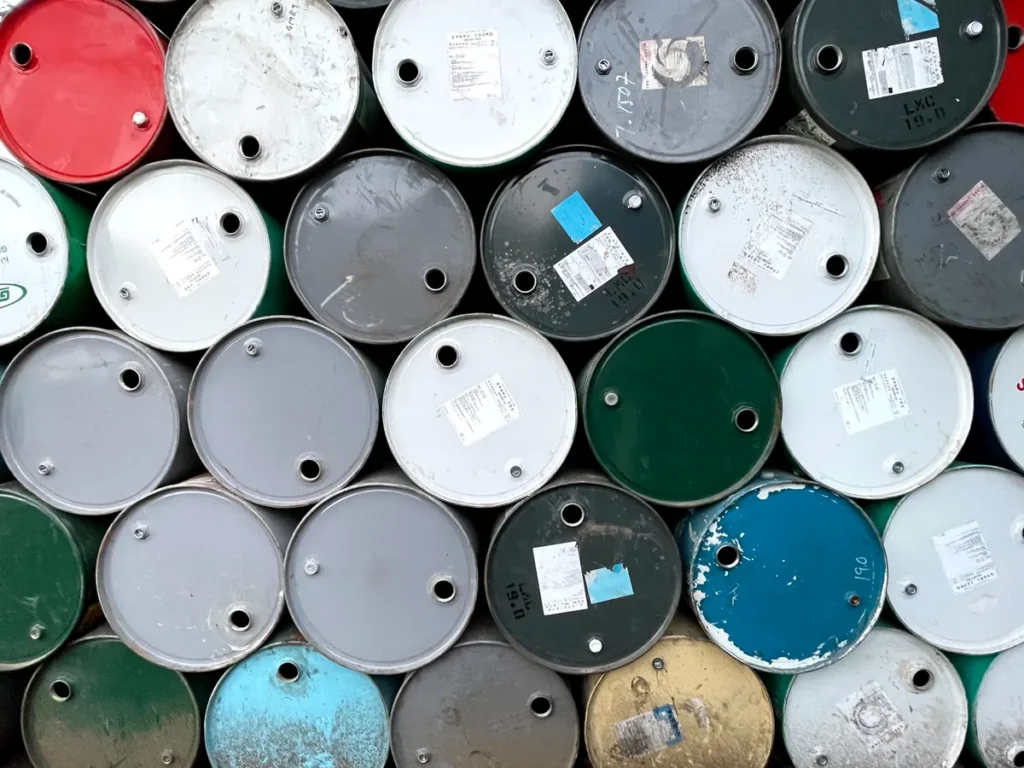
The FTSE 100 oil stocks rise on Tuesday helped the index close in positive territory, even as European markets retreated and bond markets added a note of caution to the session. The blue-chip index ended the day up 7.74 points, or 0.1%, at 10,728.04, outperforming its continental peers.
The FTSE 250, which tracks mid-sized UK companies, fell 142.97 points, or 0.6%, to close at 24,561.43. The AIM All-Share, which covers smaller growth companies listed in London, closed down 6.50 points, or 0.8%, at 794.25.
Why oil drove the FTSE 100 higher
Oil is the key to understanding Tuesday’s split between the UK index and the rest of Europe. Brent crude, the international benchmark for oil prices, crossed $90 a barrel once more as hopes faded for an early reopening of the Strait of Hormuz, the narrow waterway through which a large share of the world’s oil passes.
US President Donald Trump said on Tuesday that no talks with Iran are under way or planned, and that a naval blockade of Iranian ports remains in force. ‘There are no talks or conversations going on, or scheduled, with the Islamic Republic of Iran. The Naval Blockade remains in full force and effect. The Hormuz Strait is open and operating. All water mines have been removed or detonated,’ Mr Trump wrote on Truth Social.
In response, Brent oil for October delivery traded at $91.17 a barrel on Tuesday afternoon, up from $89.07 late on Monday. That moved the needle sharply for the FTSE 100’s two oil giants. AJ Bell head of markets Dan Coatsworth described the oil price moves as both a ‘pain and a gain for UK investors’, adding they are ‘bad for businesses and consumers, but good for the FTSE 100’s oil heavyweights BP and Shell who propped up the UK blue-chip index amid a broader European market pullback.’ BP rose 2.7%, while Shell gained 1.8%. On the FTSE 250, Harbour Energy was up 1.5%.
Mr Coatsworth also warned that ‘efforts to bring an end to the war have not been successful, and reports suggest Iran will now become more aggressive,’ adding that this ‘raises the risk of further disruption to oil supplies out of the Middle East, hence why inflation fears and potential interest rate hikes are front of mind for investors.’
The Iran blockade: what the background tells us
The tensions driving oil prices higher have a specific origin. According to a Congress.gov research document, President Trump ordered a US blockade of Iranian ports and ships leaving or going to them, with an exception for humanitarian aid shipments. The blockade ran through mid-June. During that period, US Central Command reported redirecting over 140 ships and disabling nine vessels that did not comply. On 17 June 2026, Mr Trump and Iranian President Masoud Pezeshkian signed a memorandum of understanding. The fact that Mr Trump was still declaring the blockade fully in force on Tuesday, and ruling out further talks, suggests the situation remains far from resolved in markets’ eyes.
Bond markets add to the cautious mood
Oil was not the only pressure on investors on Tuesday. Bond yields, which move inversely to bond prices and reflect the cost of government borrowing, rose on both sides of the Atlantic. Mr Coatsworth noted that in the US the 30-year Treasury yield reached a 19-year high of 5.33%, while in the UK the 30-year gilt traded at 5.85%, the highest level since May this year. The yield on the US 10-year Treasury edged up to 4.72% from 4.71% on Monday.
‘Rising long-dated bond yields are not driven solely by expectations of higher interest rates and inflation fears. They can also reflect concerns around high levels of government borrowing and investors demanding greater compensation for the risks of holding long-dated government bonds,’ Mr Coatsworth said.
UK jobs data in focus ahead of Wednesday’s inflation figures
In London, investors also digested the latest labour market numbers from the Office for National Statistics. The UK unemployment rate held steady at 4.9% in the three months to June, unchanged from the previous three-month period, and slightly above the consensus expectation of 4.8% cited by FXStreet. Year-on-year growth in average earnings, excluding bonuses, came in at 3.5% for April to June, above the FXStreet consensus of 3.4%. Including bonuses, pay grew 4.1% year-on-year.
Vacancy figures continued their gradual decline. Early estimates for May to July suggest vacancies fell by 6,000 to 707,000, compared with February to April. That is the lowest level outside the Covid-19 pandemic since September to November 2014.
James Smith, economist at ING, summed up the picture plainly: ‘The basic story here is that the jobs market is cool. We can see that in the vacancy numbers, which are still gradually falling and are well down on pre-Covid levels. And crucially for the Bank of England, there is little sign that wage growth is about to turn higher.’
In European equities, the CAC 40 in Paris and the DAX 40 in Frankfurt each closed down 0.8%. In New York, the Dow Jones Industrial Average was down 0.3%, the S&P 500 fell 0.6%, and the Nasdaq Composite dropped 1.3%.
Wednesday brings UK consumer and wholesale inflation figures, eurozone trade data, and the minutes of the last Federal Open Market Committee meeting, all of which markets will watch closely given the backdrop of rising yields and oil-driven inflation fears.