The FTSE 100 Iran oil prices story dominated London trading on Monday, with the UK’s benchmark index closing down 8.96 points, or 0.1%, at 10,822.13, as surging crude costs stoked inflation fears and investors weighed up what a forthcoming Budget might mean for an already stretched public finances.
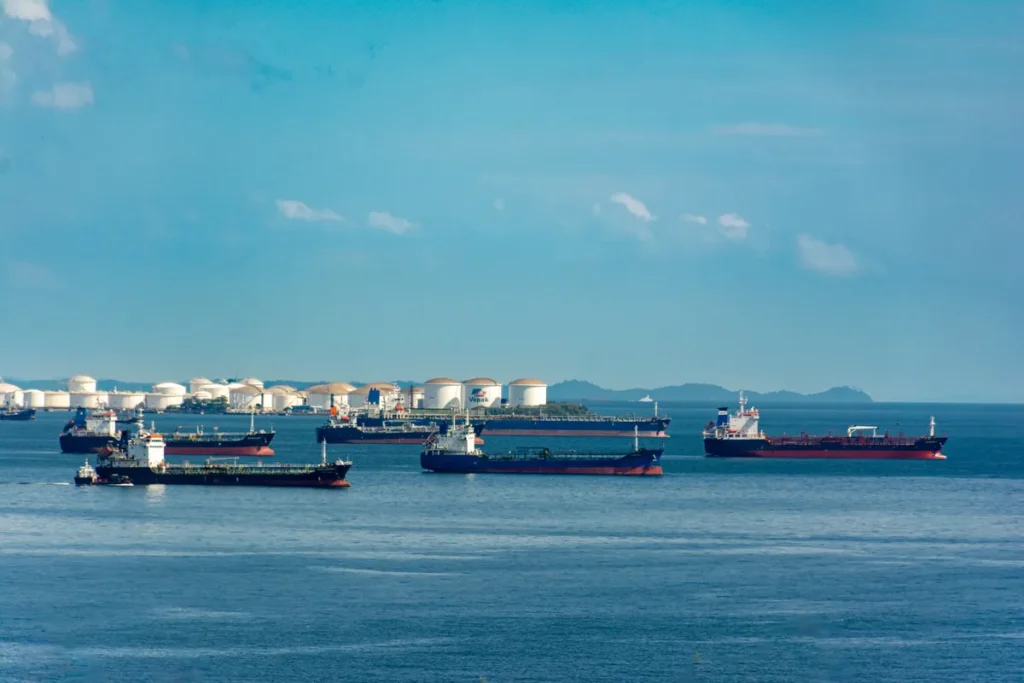
Oil prices climbed sharply after the US launched strikes on three Iranian oil tankers over the weekend, destroying one of them, in what it described as retaliation for attacks on US Navy warships. Brent crude, the international oil benchmark, surged to $97.89 a barrel on Monday afternoon from $95.18 at Friday’s London close. In response, Iran’s top security official said a new restricted zone outside the Strait of Hormuz would be declared in the coming days.
How rising oil prices are hitting London markets
The Iran oil price surge gave London-listed oil majors a boost: Shell rose 1.3% and BP gained 1.2%. Centrica led the FTSE 100 risers, up 2.2%. But the wider market felt the drag. The FTSE 250 ended down 78.03 points, or 0.3%, at 24,506.68, and the AIM all-share fell 0.41 points, or 0.1%, to 799.50.
Dan Coatsworth, head of markets at AJ Bell, put it plainly: ‘Concern about inflationary risks is only exacerbated by the latest moves in energy markets, as Brent crude briefly ticked over 97 dollars per barrel. The US and Iran continue to exchange strikes as a resolution to the crisis in the Middle East remains elusive.’
In the US, average diesel prices hit a record on Monday. The average price of diesel climbed to $5.9015 a gallon, according to motorists’ association AAA, around 30 cents higher than a week earlier, as damage to Gulf refineries during the US-Iran conflict disrupted supplies.
European markets were mixed. The CAC 40 in Paris closed up 0.3%, while the DAX 40 in Frankfurt ended down 0.3%. Financial markets in New York were closed for the Labour Day holiday.
Healey’s Budget under the FTSE 100 Iran oil prices spotlight
Against this backdrop, Chancellor John Healey made his first major speech since taking over at the Treasury, telling an audience in Coventry that the economy was ‘turning a corner’. Speaking ahead of what he described as a Budget ‘built on fiscal discipline’, Healey pledged to keep government borrowing under control and tackle the growing burden on businesses, while striking an optimistic tone on the wider economic outlook.
Healey confirmed the Autumn Budget will take place on Wednesday, 28 October 2026, according to TechTimes. He said he and Prime Minister Andy Burnham were ‘in lockstep’ in their commitment to meeting the fiscal rules, ‘balancing the books with a buffer to protect against uncertainty’ and ‘controlling borrowing to bear down on inflation and reducing long-term pressures on our public finances.’
The room to manoeuvre, however, may be narrower than first thought. Analysts at Pantheon Macroeconomics calculate, per TechTimes, that a global bond market rout has slashed Healey’s fiscal cushion from £23.6 billion at the Spring Statement to roughly £13 billion now. That is a sharp reduction in the headroom available before any new spending or tax decisions are made.
Healey also announced a £150 million fund to help northern scale-up businesses, along with plans for a roadmap on fiscal devolution to return power to local leaders, according to BBC News. The Chancellor said his goal was to ‘move money and power out of Westminster, and into every postcode around Britain.’
Sterling dipped slightly against the dollar during the session, quoted at $1.3516 at the London close, down from $1.3522 on Friday, though it edged up marginally against the euro to 1.1638.
Company movers and the broader picture
Standard Life rose 2.0% after reporting a stronger-than-expected half-year profit. The company said its attributable pre-tax loss widened to £272 million in the first half of 2026 from £209 million a year earlier, though total income surged to £21.73 billion from £8.60 billion. Next rose 1.1% after winning its appeal against a landmark equal pay ruling.
On the FTSE 250, Hollywood Bowl Group was the worst performer, losing 6.0% after Deutsche Bank cut its price target to 358p from 376p, while retaining its ‘buy’ rating. Oxford BioMedica rose 5.8%, and B&M European Value Retail gained 3.4% after RBC raised its price target to 275p from 240p.
Among smaller companies, Kropz plunged 33% after launching an ‘urgent operational review’ of its Elandsfontein asset, citing lower sales prices and rising costs linked to the US-Iran conflict. United Oil & Gas jumped 24% after naming Donal Meehan, who has upstream experience at Exxon Mobil, as its new operating chief.
IQE rose 3.0%, buoyed by a 43% jump in revenue and a broader technology rally linked to optimism around OpenAI’s newest artificial intelligence model, GPT-6. Coatsworth noted that ‘many of the headlines from the dominant AI theme remain positive,’ though he cautioned that investors face the prospect of an interest rate rise at the US Federal Reserve’s meeting later this month.
Tuesday’s calendar brings UK retail sales figures from the British Retail Consortium, along with GDP data from Japan and trade balance releases from China, Germany and France. On the corporate side, Dunelm Group reports full-year results.