
Enough rape evidence kits have now been distributed to 10,000 people across the UK, as the non-profit behind them pushes to expand into more university cities and challenges the idea that survivors must choose between going to police or doing nothing.
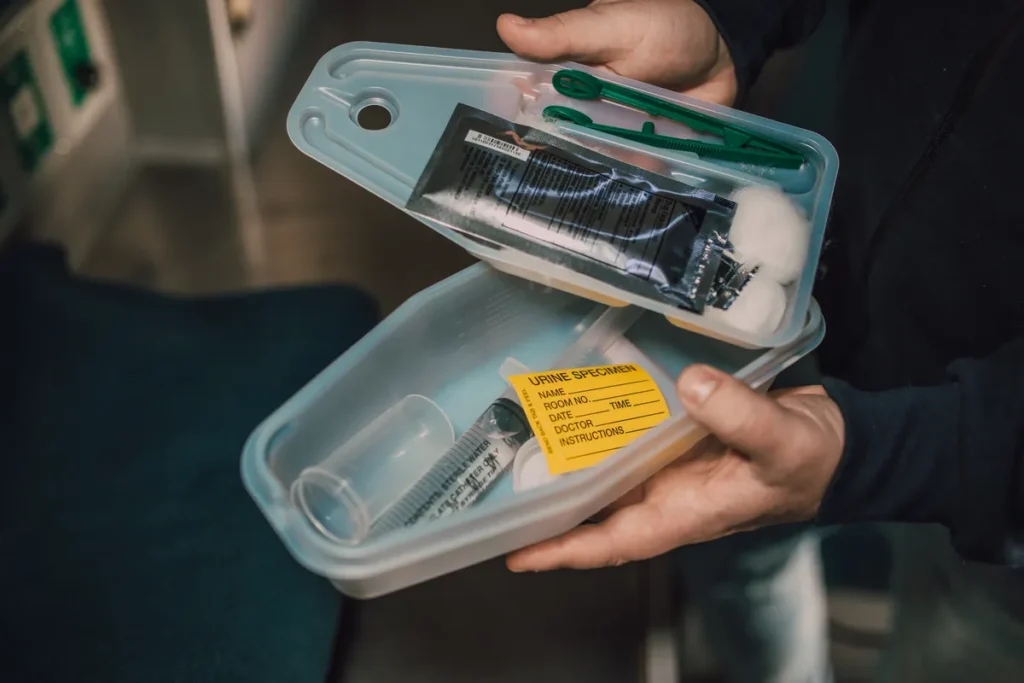
Enough produces self-swabbing kits that people who believe they have been sexually assaulted can use at home. The kit allows a person to collect DNA themselves and post it to a private laboratory for analysis, preserving evidence while keeping control over whether or not to take the matter further.
Why Katie White founded Enough
Katie White, who is 30, left a role in brand strategy at Lippincott to set up Enough in 2024. She says she ‘wanted to solve a meaningful problem, and saw nothing more meaningful than rape prevention.’ Personal experience shaped that decision: ‘It’s happened to several people very close to me. The more I researched and learnt, the more disappointed I was that nothing is being done about it, despite it being classified a national emergency by the Government.’
The figures she encountered were stark. In England and Wales, of 70,000 rapes reported to police in 2021-22, only 2,223 resulted in charges. At the same time, 83% of survivors choose not to go to the police at all. White’s response was to ask survivors directly what was stopping them and what would make it possible for them to come forward, then build a service around those answers.
The result is what Enough calls ‘option three’: a route that sits alongside, rather than replacing, the police and Sexual Assault Referral Centres (SARCs). ‘Our approach is option three, coming after police or a Sexual Assault Referral Centre,’ White explains. ‘We encourage everyone who wants to go there to do so first, but too many aren’t able to engage and they deserve a way to preserve evidence and control.’ Kits are available free online with 24-hour delivery, and the at-home process is designed to be both discreet and quick.
The ‘big orange’ campus campaign
Enough’s public launch centred on Bristol University, where the team arrived with orange paddling pools and student ambassadors and handed out 8,000 kits, enough for one in every four students. Bars and clubs offered kits free to anyone who ordered a ‘hot orange’. Sports teams were given kits to store in dedicated safe spaces.
Male sports teams became active supporters of the campaign. White says the framing shifted behaviour: ‘Male sports teams proudly backed the campaign, showing that true men speak up and become part of the solution. It became shameful for them not to be involved, kickstarting conversations about consent.’ The orange branding gave the movement a visible, shareable identity on campus without requiring survivors to identify themselves publicly.
Enough ran on £150,000 in philanthropic funding in its first year, with the aim of becoming self-sustaining once the model had been proved. The average cost of running Enough for students in a university city for one year is £100,000. White worked unpaid for two years before recently beginning to take a salary.
Opposition and the question of funding
Victim Support and some rape charities have raised concerns about the kits, arguing that survivors may wrongly treat them as a substitute for attending a SARC, and that the approach could affect conviction rates. White maintains that Enough is explicitly positioned as an additional option, not a replacement, and says the evidence-preservation route serves people who currently have no route at all.
Funding remains the central challenge for the organisation. White is candid about the tension between the subject matter and commercial realities: ‘On certain topics, the notion of “making money” seems wrong; rape prevention is one of them. However, non-profits and charities are limited because they have to fundraise, and it can take longer to get the same amount of money that a for-profit organisation would.’ She argues for ‘a balance of respecting the importance of aims beyond profit, while also making it easier to access funding streams to do the important work.’
The UK Government has classified sexual violence a national emergency, yet the gap between reported rapes and prosecutions has remained wide. White says that gap is precisely what the Enough rape evidence kits are designed to address: giving survivors a way to document what happened to them, on their own terms, and decide later what to do with that evidence.