
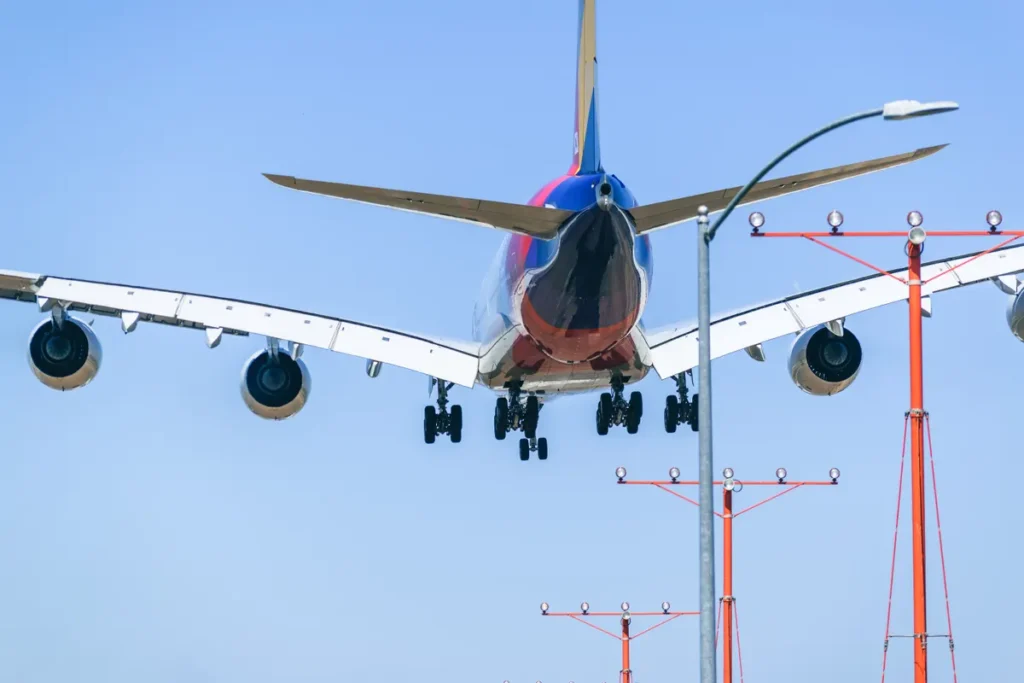
A severed fibre optic cable at a key air traffic control facility, the Philadelphia TRACON, triggered a cascade of ground stops and diversions across the north-eastern United States on Monday, with more than 1,000 flights cancelled nationwide and over 6,000 delayed, according to ABC7 San Francisco. Newark, Philadelphia and, later in the day, New York City airports all faced ground stops imposed by the Federal Aviation Administration (FAA).
TRACON stands for Terminal Radar Approach Control. It is the facility responsible for guiding aircraft as they climb away from or descend towards an airport, acting as a bridge between a local airport’s control tower and the wider national airspace system. Philadelphia’s TRACON handles traffic for both Newark Liberty International Airport and Philadelphia International Airport.
What caused the Philadelphia TRACON outage
FAA administrator Brian Bedford told reporters that the primary circuit into the facility, which carries data in and out, failed on Monday morning. When engineers looked to the backup system, they found it was also out of action: a fibre optic line running between New Brunswick and Newark, New Jersey, had been severed, according to WBAL-TV. Construction contractors working in the area had dug up and cut a fibre cable running adjacent to an Amtrak rail line in New Jersey.
With both the primary circuit and the backup line down, the TRACON could not function normally. The FAA halted arrivals into Newark Liberty International Airport, Philadelphia International Airport and New Jersey’s Teterboro Airport while the fault was investigated. By around 1pm Eastern Time (ET), the disruption had spread further north, with flights into LaGuardia Airport and John F. Kennedy International Airport in New York City also halted.
Scale of the disruption across Newark and Philadelphia
The figures give a clear sense of how badly the north-east was affected. Roughly 250 flights in and out of Newark were delayed, representing more than a fifth of that airport’s daily schedule, according to FlightAware. By 6pm, Philadelphia was facing arrival delays averaging 212 minutes, the FAA said, as reported by WBAL-TV.
Diversions added to the complexity. As of about 1pm ET, 67 flights bound for Newark were forced to land elsewhere, according to Flightradar24. Those diverted aircraft included international services arriving from Iceland, Egypt, Greece, Spain and France. A United Airlines flight from Berlin was sent to Detroit Metropolitan Wayne County Airport, while an SAS flight from Stockholm, originally bound for Newark, was redirected to Washington Dulles International Airport.
United Airlines, whose busiest international hub is Newark Liberty International Airport, waived flight change fees for affected travellers.
A familiar problem for an ageing system
Monday’s chaos is the latest episode in a long-running story about the state of US air traffic control infrastructure. Ageing equipment and technology failures have frustrated airline executives for years. The Trump administration announced a multibillion-dollar overhaul of US air traffic control equipment and resources, though the physical vulnerabilities exposed on Monday, a single contractor accidentally cutting a fibre cable, illustrate the practical complexity of upgrading a system that cannot simply be switched off.
In a development that arrived on the same day as the outage, the Transportation Department and the FAA unveiled a new artificial intelligence-powered tool designed to analyse data and minimise flight delays. The tool was rolled out first in Washington, DC. Whether it would have caught or mitigated Monday’s specific fault, a physical cable severed by construction work, is a separate question, but the timing underlines how much pressure officials are under to modernise the network.
The FAA confirmed the ground stops were lifted progressively through the afternoon, though the knock-on delays accumulated across the day meant passengers at Newark and Philadelphia were still experiencing waits well into the evening, with Philadelphia’s average delay reaching 212 minutes by 6pm.