
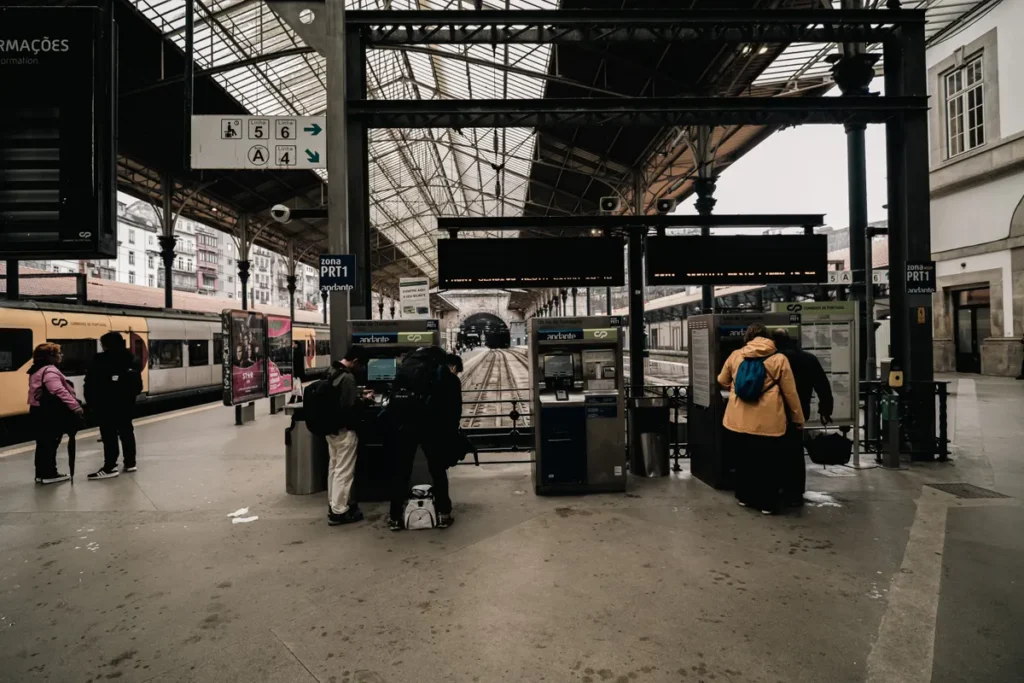
Trainline ticket sales growth was held back over the first half of its financial year by the Government’s freeze on regulated rail fares, disruption caused by hot weather, and strikes on the London Underground, the company has said.
Trainline is an online platform that lets passengers buy rail and coach tickets from operators across the UK and Europe. It makes most of its money by taking a commission on each ticket sold.
The company reported UK consumer net ticket sales of £2.1 billion for the six months to the end of August, a figure that was more or less level with the same period the previous year. Strong underlying demand for train journeys helped, as did a lower volume of refunds following a change to industry policy in April. But those gains were partially cancelled out by a trio of headwinds that, together, kept the headline sales number flat.
How the fare freeze affected Trainline ticket sales growth
The biggest structural factor was the Government’s decision to freeze regulated rail fares across England. Regulated fares include peak-time returns for commuters and off-peak returns between major cities. By holding those prices steady, the freeze prevented the kind of revenue uplift that price increases would ordinarily deliver. For a platform whose income is tied directly to the value of tickets sold, even a modest freeze has a meaningful knock-on effect.
Hot weather added a further complication. High temperatures can damage overhead power lines and warp steel rails, causing delays and cancellations that deter passengers from travelling. Strikes on the Transport for London (TfL) Tube network had a similar effect, reducing the number of journeys Londoners were likely to pair with a mainline rail trip.
The refund policy change, which took effect in April, produced a mixed outcome. Fewer refunds meant more tickets were actually used, which is positive for net sales figures. But Trainline also charges a fee when a passenger requests a refund, so a drop in refund volumes directly reduced that fee income. Under the new rules, passengers can only request a refund before 11.59pm on the day before travel.
The CMA investigation into pricing transparency
Separately, Trainline is facing scrutiny from the Competition and Markets Authority (CMA), the UK’s competition watchdog. The CMA’s enforcement case centres on whether Trainline’s mandatory fees (the charges added on top of the base ticket price) are included in the total price a consumer sees at the very beginning of the purchasing process. The concern is that customers may not be seeing the full cost upfront before they commit to buying.
The CMA has opened similar probes into Virgin Atlantic and Red Driving School as part of a broader clampdown on what it considers misleading pricing practices across various sectors.
The investigation is ongoing, and Trainline has not been found to have breached any rules at this stage.
Trainline’s scale and its chief executive’s view
Despite the flat sales period, Trainline operates at considerable scale. According to a GOV.UK document on the company, Trainline gives customers access to tickets from more than 270 operators across 40 countries, making it one of the larger independent travel platforms available.
Jody Ford, Trainline’s chief executive, described the period positively despite the challenges: ‘We delivered a robust first half, with customers choosing and returning to Trainline for the value and features we offer, against a backdrop of resilient underlying demand for UK rail travel.’
Ford also pointed to the company’s position in the market: ‘The industry is moving through an important period of change and Trainline is well positioned, with real scale in the UK and across Europe, deep customer loyalty, and over three million customers now holding a digital railcard in our app.’
The CMA’s investigation into Trainline’s pricing practices will be a key thing to watch as the company moves into the second half of its financial year.